
Ethan Hawke Almost Quit Acting. After a Hit
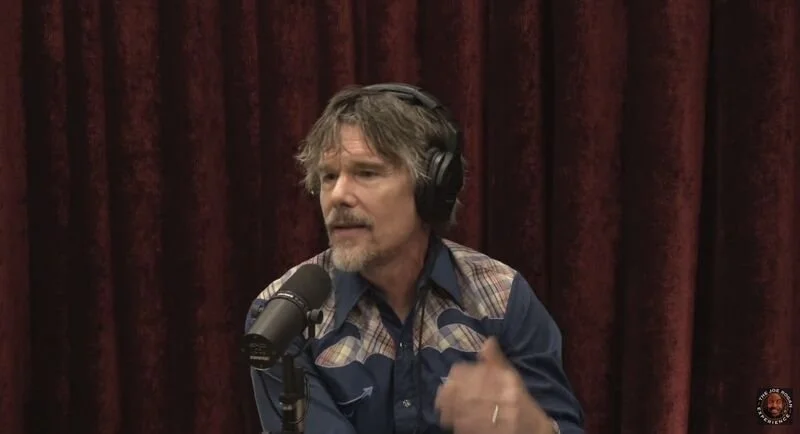
Ethan Hawke on Joe Rogan Podcast
I learned something about Ethan Hawke on Joe Rogan’s podcast that stopped me cold.
He almost quit acting.
Not after a bomb.
After a hit.
In 1985, Explorers came out. Ethan was 14 years old. He starred alongside River Phoenix. For a brief moment, Hollywood opened the door and let him step inside.
And then it went quiet.
The phone stopped ringing.
The meetings dried up.
No explanation. Just… nothing.
So Ethan did what people do when the dream stalls but hasn’t fully died yet. He moved into a small, cheap apartment in Koreatown. With his mom. And his grandmother.
No red carpets.
No momentum.
No sense that this was all “working” the way it was supposed to.
Just auditions that went nowhere and a thought that kept getting louder: Maybe this is it.
He’s talked about being close to walking away. Going back to school. Choosing something more “responsible.” Something that didn’t feel like standing still while the world passed him by.
Then he heard a story about Jeff Bridges.
Jeff Bridges had been a child star too. Early success. Big roles. And then—years where nothing happened. Roles didn’t come. Careers that, on paper, looked finished.
But Jeff made a decision.
“I’ll stay in the work,” he said.
“Even if the work doesn’t look like what I imagined.”
That idea landed.
So Ethan stayed.
He did theater.
He wrote.
He took parts that didn’t make sense to agents or résumés.
Nothing exploded.
Nothing “saved” him.
But slowly, quietly, the work stacked.
Not a breakout.
A body of work.
Decades later, Ethan Hawke isn’t respected because of one role. He’s respected because he never left the room.
And that’s the part we don’t talk about enough.
Most careers don’t end in failure.
They end in impatience.
Stay long enough.
Do the work that counts when nobody’s watching.
That’s usually where the real story starts.
